


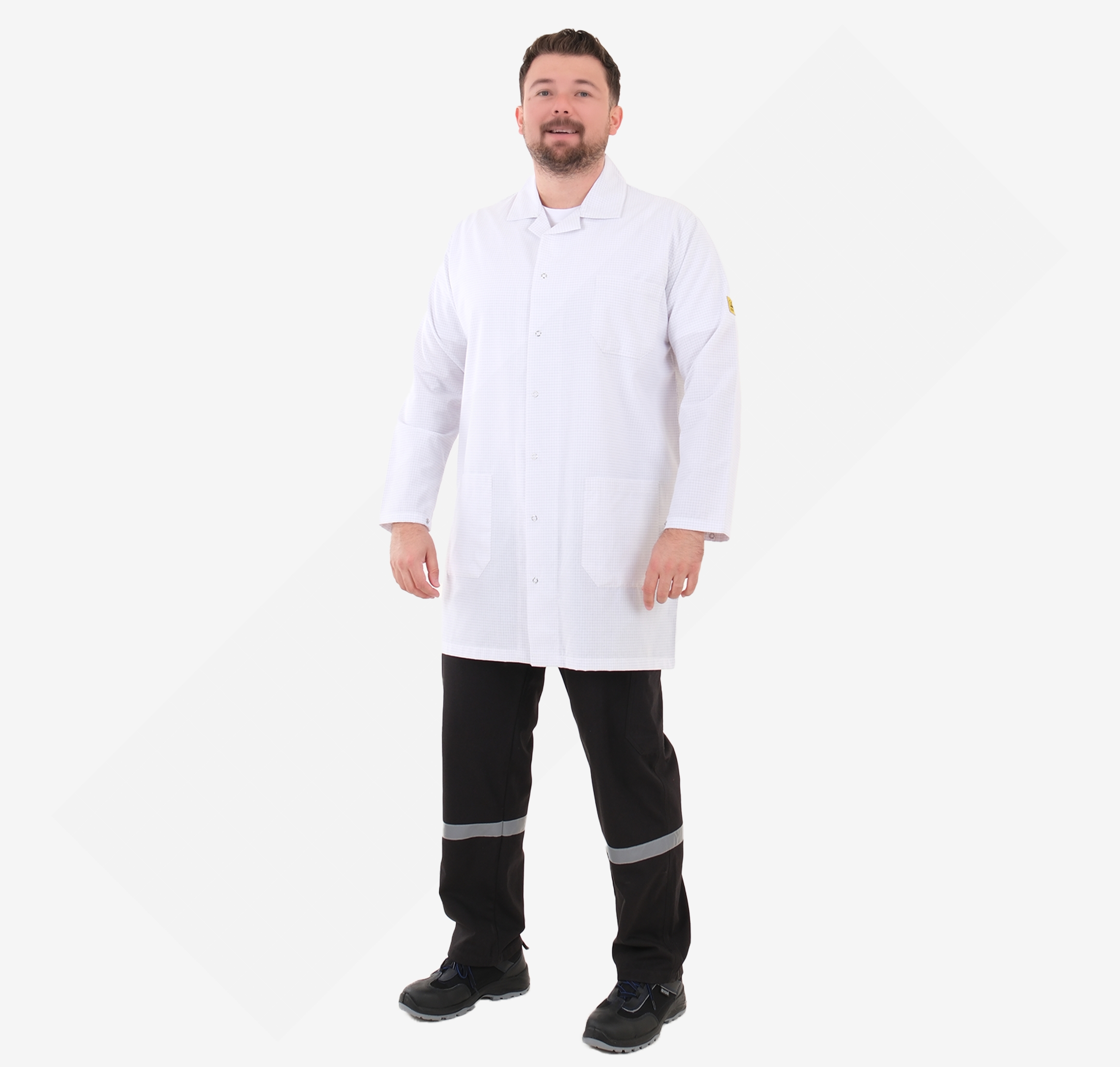
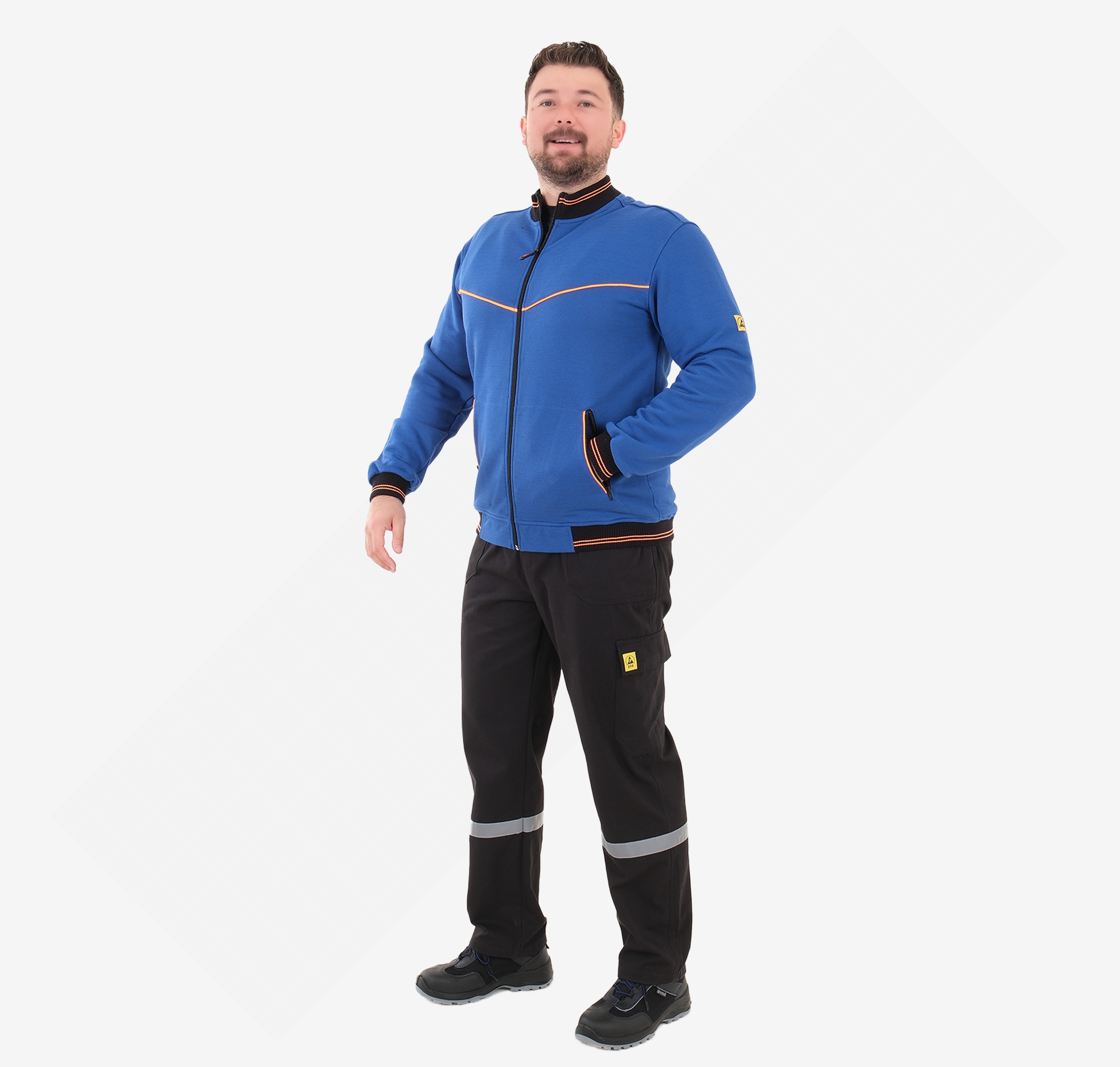

What is Antistatic Fabric?
Antistatic fabrics are fabrics specially designed to minimize or completely prevent static electricity accumulation. These fabrics stand out because they usually contain conductive threads or antistatic fibers. Thus, it ensures a safe dissipation of static charge.
In Which Sectors Are Antistatic Fabrics Used?
Antistatic fabrics are used in many industries where static electricity can cause problems. Featured sectors:
• Electronic production
• Petrochemicals
• Health and medicine
• Automotive
• Defense industry
• Explosive and flammable material processing
What are the uses of antistatic work clothes?
Antistatic work clothes protect employees against risks caused by static electricity. These suits ensure safety, especially in environments where explosive, flammable gases or sensitive electronic components are present.
What Technologies Are Used in the Production of Antistatic Fabrics?
• Threads containing carbon fibers or metal fibers
• Nanotechnological coating processes
• Conductive polymers
• Surface modification with electrolytic solvents
• Laminated membrane technologies
How to Test Antistatic Fabrics and Work Clothing?
Tests are usually performed by:
• Surface resistance (Ohm measurement)
• Electrostatic charge dissipation test (EN 1149-1)
• Conductivity analysis
• Persistence of antistatic properties after wear and washing
What Standards Should Antistatic Work Clothes Comply With?
Antistatic work clothes should generally be produced in accordance with the following standards:
• EN 1149-1: Measurement of electrostatic properties
• EN 1149-5: Performance and design requirements
• ISO 11612: Heat and flame resistance (additional requirement)
How Long is the Lifespan of Antistatic Fabrics?
The lifespan of antistatic fabrics depends on the material used and the conditions of use. On average, they can maintain their antistatic properties for 50-100 washings. Proper maintenance is required for longer life.
Can Antistatic Fabrics Also Have Other Properties?
Yes, antistatic fabrics often offer more than one functional feature. For example:
• Ignites slowly (flame retardant)
• Antibacterial
• Waterproof
• Breathable
How Many Ohms Should the Surface Resistance of Antistatic Fabrics Be?
For antistatic fabrics, the surface resistance should generally be between 10^5 and 10^9 Ohms. This range is sufficient to comply with the EN 1149-1 standard.
What Do EN 1149-1 Test Standards Measure?
EN 1149-1 measures how fabric disperses electrostatic charge accumulation. In this test, surface resistance or charge discharge rate is evaluated.
How Are Antistatic Fabrics Affected by Temperature and Humidity Changes?
Antistatic fabrics generally perform better in humid environments because moisture increases conductivity. However, extreme temperature changes can negatively affect the antistatic properties of some materials.
Should the Sewing Threads of Antistatic Work Clothes Also Be Antistatic?
Yes, ideally sewing threads should also be antistatic. This is necessary to ensure that all parts of the workwear spread the electrostatic charge in harmony.
Can Antistatic Fabrics Be Produced in an Environmentally Friendly Way?
Yes, antistatic fabrics can be produced using environmentally friendly methods. For example:
• Using recyclable materials
• Avoiding harmful chemicals
• By choosing production processes that minimize water and energy consumption